


Let me tell you about the day I first saw a Corsair F4U RC airplane in action. It was at my local flying field on a crisp Saturday morning, and this thing came screaming across the sky, that distinctive inverted gull wing silhouette immediately recognizable. I was hooked immediately. There's just something special about flying a scale replica of one of the most iconic fighter planes of WWII. If you're considering getting an F4U Corsair for your RC collection, or you're just curious about what makes these models so popular, you're in the right place.
I've been flying RC planes for over 7 years now, and I've owned my share of warbirds. The Corsair has always held a special place in my heart, both for its historical significance and its incredible flying characteristics. In this guide, I'll share everything I've learned about these amazing models, from choosing the right one for your skill level to getting the most out of your flights. Let's dive in.
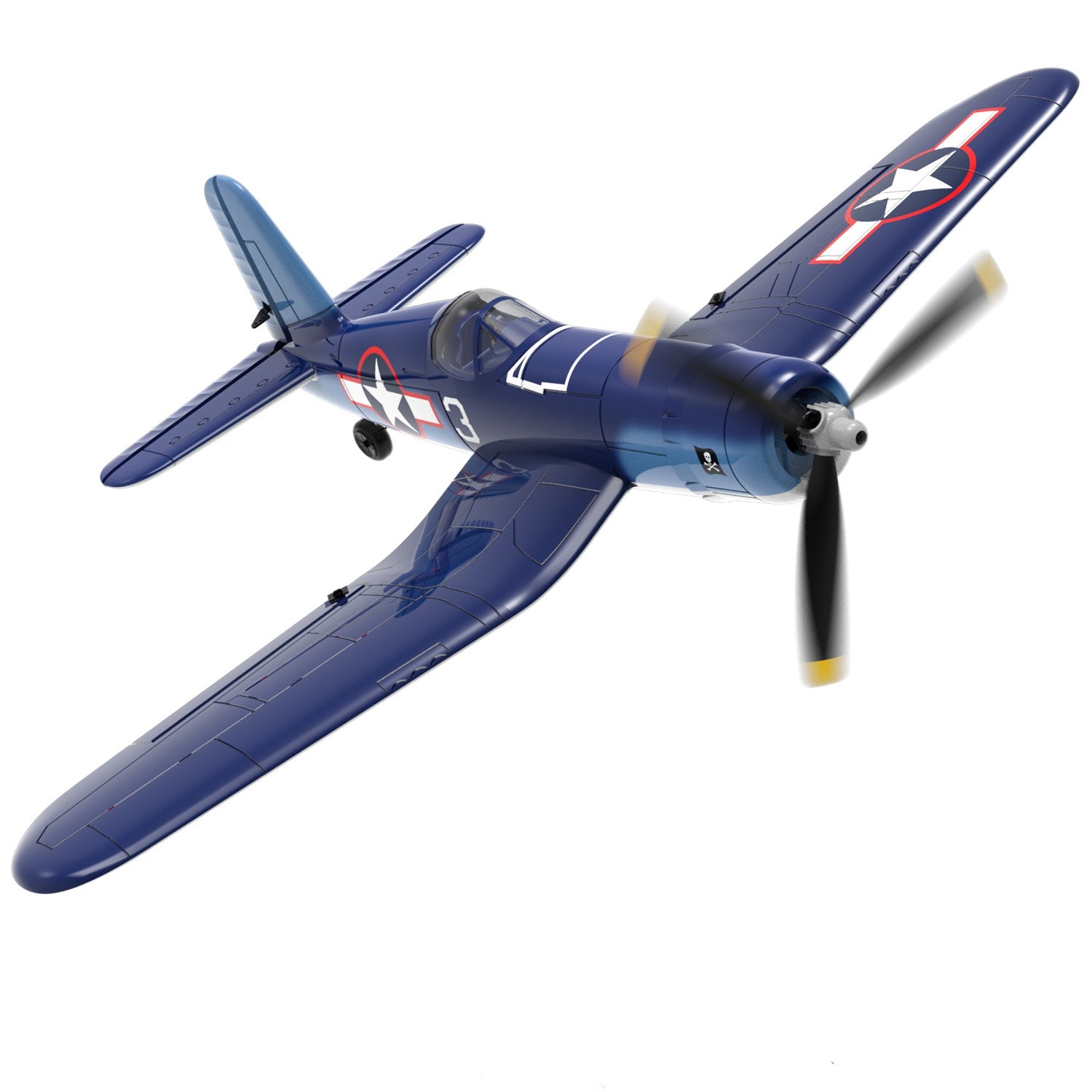
What Makes the Corsair F4U Such an Iconic RC Airplane?
Before we get into the nitty-gritty of RC models, let's talk about why the real Corsair is so legendary. The Vought F4U Corsair was an American fighter aircraft that served primarily in WWII and the Korean War. That distinctive inverted gull wing design wasn't just for looks—it allowed for shorter landing gear (critical for carrier operations) while still giving clearance for the massive 13-foot propeller. With a top speed of over 400 mph, it was one of the fastest piston-engine fighters ever built, and it boasted an 11:1 kill ratio against enemy aircraft in the Pacific theater.
For RC enthusiasts, that iconic design translates to one of the most recognizable scale models you can fly. There's just something special about seeing that distinctive wing shape slicing through the sky. But beyond the looks, the Corsair's design actually makes for a great flying RC model, too. The wing design gives it excellent stability and lift characteristics, while the relatively large fuselage provides plenty of room for electronics and battery.
Over the years, I've found that Corsair models tend to have a very forgiving flight envelope, especially when they're equipped with modern gyro stabilization systems. That said, they do have some unique characteristics you need to be aware of, which we'll cover later in this guide.
Key Historical Facts Every Corsair Fan Should Know
- Nicknamed "Whistling Death" by Japanese forces due to the distinctive sound of its engine
- First flew in 1940, and remained in service until the 1960s with some air forces
- The first U.S. fighter plane capable of exceeding 400 mph in level flight
- Total production of over 12,500 aircraft between 1942 and 1953
- Served in the U.S. Navy, Marine Corps, and Royal Navy Fleet Air Arm
When you're flying an RC Corsair, you're not just flying any model plane—you're piloting a piece of history. That's part of what makes this hobby so special for so many of us.

Choosing the Right Corsair F4U RC Model for Your Skill Level
One of the biggest mistakes I see new pilots make is jumping into a high-performance warbird before they're ready. While modern stabilization systems have made these planes much more accessible, they still require some experience to fly well. Let's break down what to look for based on your experience level.
Beginner Pilots: Should You Start with a Corsair?
Honestly? If you've never flown an RC plane before, a Corsair probably isn't your best first model. These are mid-performance aircraft that require some basic flying skills. That said, if you already have some experience with basic trainers and you're ready to move up to your first warbird, a Corsair with a good stabilization system can be a great choice.
For beginners moving up, I recommend looking for these features:
- Gyro stabilization: Look for models with 3-axis gyro systems that have multiple flight modes. This lets you start with maximum stabilization and gradually turn it off as you gain confidence.
- RTF (Ready-to-Fly) packages: These come with everything you need, including the transmitter, battery, and charger. No guesswork about compatible components.
- Durable EPO foam construction: EPO foam is flexible and impact-resistant, which forgives the inevitable hard landings while you're learning.
- 4-channel control: This gives you control over throttle, aileron, elevator, and rudder—standard for most sport and scale planes.
- Wingspan around 400-600mm: Smaller models are more affordable, easier to transport, and less intimidating when you're still learning.
The VolantexRC F4U Corsair 4CH Warbird Airplane is a perfect example of a beginner-friendly warbird. At 400mm wingspan, it's the ideal size for new warbird pilots—small enough to fly in local parks, but large enough to have stable flight characteristics. It comes with the advanced Xpilot stabilizer system that has three flight modes, so you can start with full stabilization and work your way up as you get more comfortable. The one-key aerobatic feature is a huge bonus too—you can pull off impressive loops and rolls with just the push of a button, even if you're still learning aerobatic maneuvers. I've recommended this model to several friends who were moving up from trainers, and they've all had great experiences with it.
Intermediate Pilots: Stepping Up to More Performance
Once you've got a few dozen flights under your belt and you're comfortable with basic aerobatics, you might want to step up to a larger, more powerful Corsair model. For intermediate pilots, look for these features:
- Wingspan 800-1200mm: Larger models fly more scale-like, handle wind better, and are more visible at a distance.
- Brushless power system: Brushless motors are more powerful, more efficient, and longer-lasting than brushed motors.
- Retractable landing gear: Nothing looks cooler than pulling up the gear after takeoff on a scale warbird!
- Flaps: Flaps help with slower landings and give you more scale functionality.
- PNP (Plug-and-Play) options: If you already have a transmitter you like, PNP models let you use your existing radio gear.
If you're ready for an upgrade from the 400mm model, the VolantexRC 500mm Corsair F4U Brushless is the perfect next step. With its upgraded brushless motor system, it offers significantly more power and speed while still maintaining the stable flight characteristics that make Corsairs so enjoyable to fly. The 500mm size gives you better wind resistance and more presence in the air, while still being compact enough for park flying. I upgraded to this model earlier this year, and the difference in performance is night and day—you get faster climbs, more responsive controls, and enough power for advanced aerobatics. Intermediate models give you a lot more performance and scale detail. Just be prepared for the learning curve—larger models have more inertia and land faster than smaller ones. Take your time getting used to any new plane, and start with plenty of altitude until you get a feel for its handling.
Advanced Pilots: High-Performance and Giant Scale Models
For experienced pilots looking for the ultimate Corsair experience, there are some incredible high-performance and giant scale models available. These can range from 1.5m wingspan sport models all the way up to 1/4 scale behemoths with gas engines.
For advanced pilots, features to look for include:
- All-wood or composite construction: For the ultimate in scale detail and performance.
- Gas or turbine power: For authentic sound and incredible performance.
- Full scale functionality: Working flaps, retracts, navigation lights, functional cowl flaps, etc.
- Customizable control surfaces: For precision aerobatics and scale flight.
Just remember—these larger models are a significant investment, both in terms of money and time. Make sure you have plenty of experience with similar models before jumping into giant scale.

My Personal Experience Flying the VolantexRC F4U Corsair 400mm
I picked up the VolantexRC F4U Corsair 4CH Warbird Airplane last spring when I was looking for a fun, easy-to-transport warbird for weekend park flying, and it's quickly become one of my go-to models. Let me give you my honest thoughts after 6 months and over 50 flights with this little gem.
First off, the unboxing experience was great. It comes almost completely assembled—you just need to attach the wing and tail, charge the battery, and bind it to your transmitter (or use the included one if you get the RTF version). The build quality is impressive for the price point, with nice detailed decals and a pretty accurate scale appearance for a 400mm model. That iconic inverted gull wing looks perfect even at this small size.
First Flight Impressions
I was actually surprised at how well this little plane flies. The Xpilot stabilizer system is a game-changer for new warbird pilots. Takeoff is incredibly easy—just give it full throttle, a little up elevator, and it lifts off smoothly and predictably. On the beginner flight mode, it's extremely stable, almost to the point of being able to fly hands-off in calm conditions. That stability gave me so much confidence when I was first getting used to warbird flying.
The one-key aerobatic feature is my favorite part. I'm still working on perfecting my aerobatic skills, but with just the push of a button on the transmitter, I can pull off perfect loops, rolls, and even inverted flight. It's such a fun feature to show off to friends at the field, and it's helped me learn what proper aerobatic maneuvers should feel like when I'm flying manually.
As you switch to the intermediate and advanced modes, the gyro assistance decreases, and you get more natural control response. In advanced mode, it's surprisingly responsive for a small scale model—it will do Cuban eights, stall turns, and even basic knife edge flight without any issues. I was impressed with how well it tracks through maneuvers, even in light wind.
Landings are also very forgiving. The high wing loading means it has a bit of a stall speed, but as long as you keep some power on during final approach, it settles in nicely. I've had my share of rough landings with this plane, and the EPO foam has held up incredibly well—no major damage even after a few cartwheels when I misjudged the crosswind.
What I Love About This Model
- Perfect 400mm size: At 400mm wingspan, it's compact enough to fit easily in the back seat of my car, and I can even take it with me on trips if I want to fly somewhere new. It's the ideal size for flying in local parks without needing a huge flying field.
- Xpilot stabilization system: The three flight modes make it perfect for pilots of all skill levels. Beginners can start with full stabilization, while more experienced pilots can turn off the assists for more responsive flying.
- One-key aerobatics: This feature alone makes this model worth every penny. It's so much fun to be able to pull off professional-looking maneuvers even if you're still learning.
- Battery life: With the included 2S 400mAh LiPo battery, I get about 7-8 minutes of flight time per charge, which is pretty standard for models this size. I keep 3 batteries in my field box, so I can get plenty of flying in before I need to recharge.
- Durability: Like I mentioned, I've crashed this thing more times than I care to admit, and it's still going strong. The EPO foam takes impacts really well, and spare parts are readily available if you do break something.
- Value: For under $150 RTF, you get a great flying scale model with a advanced gyro system, one-key aerobatics, transmitter, battery, and charger. It's hard to beat that value.
What Could Be Better
It's not perfect, of course. A few things I wish were different:
- The included transmitter is pretty basic. If you're serious about the hobby, you'll probably want to upgrade to a better radio down the line.
- It doesn't handle wind very well. Anything over 10 mph starts to buffet it around pretty good. This is expected for a small, light model, but something to be aware of if you fly in windy areas often.
- The scale details are pretty basic. But again, for the price point, this is understandable.
Overall, I highly recommend this model for anyone looking for an affordable, fun-to-fly Corsair that doesn't require a huge investment. It's perfect for weekend flying at the park, and it's helped me work on my warbird flying skills without risking a more expensive model.

Common Questions About Corsair F4U RC Airplanes
Are Corsair RC planes hard to fly?
This is probably the most common question I get about these models. The answer depends a lot on the specific model and your experience level. Smaller models with good gyro stabilization like the VolantexRC F4U Corsair 4CH with its Xpilot stabilizer are actually quite manageable for pilots who have some basic experience with trainers. The stabilizer system takes care of a lot of the tricky parts of warbird flying, making it much more accessible for newer pilots. Larger, more powerful models without stabilization can be quite challenging, even for intermediate pilots.
The biggest thing to watch out for with Corsairs is the left-turning tendency on takeoff, just like the real plane. The large propeller creates a lot of torque, so you need to be ready with right rudder as you accelerate. The gyro systems in modern models help a lot with this, but it's still something you need to be prepared for.
What's the best size Corsair for a first warbird?
For your first warbird, I recommend something in the 400-600mm wingspan range. These are small enough to be affordable and durable, but large enough to handle well in the air. The 400-500mm size is perfect for park flying, and you don't need a huge field to operate them.
Anything larger than 1m wingspan for your first warbird is probably overkill. They're more expensive, harder to transport, and more intimidating when you're still learning. Start small, build your skills, then move up to larger models as you gain confidence.
How much does a good Corsair F4U RC airplane cost?
You can get a decent RTF beginner model like the VolantexRC F4U Corsair 4CH (400mm) with Xpilot stabilizer for $100-$150. This is an incredible value considering you get a complete system with stabilization, one-key aerobatics, and everything you need to fly right out of the box. If you're looking for more performance, the VolantexRC 500mm Corsair F4U Brushless comes in at around $150-$200 and offers significantly better power and performance with its upgraded brushless motor system. Intermediate models in the 800-1200mm range will cost you $200-$400 depending on features. High-performance and giant scale models can cost anywhere from $500 to several thousand dollars, especially when you factor in the radio gear, batteries, and other equipment needed to fly them.
Don't forget to budget for extra batteries, spare parts, and tools! I usually recommend setting aside about 25% of the model cost for these additional expenses, especially when you're starting out.
Can you fly a Corsair RC plane in the wind?
This depends on the size of the model. Smaller models under 600mm wingspan don't handle wind very well—anything over 10 mph will make them hard to control. Larger models with more mass handle wind much better. A 1m+ wingspan Corsair can handle winds up to 15-20 mph without too much trouble, assuming you have the piloting skills to handle it.
As a general rule, if the wind is strong enough that you have trouble walking straight, it's probably too strong to fly any RC plane, especially a warbird. Always err on the side of caution when it comes to wind conditions.
What accessories do I need for my Corsair RC airplane?
At a minimum, you'll need:
- Extra batteries (at least 2-3 so you can fly longer between charges)
- A good quality LiPo battery charger
- Basic tools for repairs (screwdrivers, glue, tape, etc.)
- Spare propellers (you will break these)
- A LiPo safe bag for charging and storing batteries
For intermediate and advanced models, you might also need additional tools for setup and maintenance, like a servo tester, pitch gauge, and more.
Maintenance Tips to Keep Your Corsair Flying Great
Proper maintenance is key to getting the most life out of your RC Corsair. I've learned this the hard way over the years—skipping regular maintenance leads to unexpected crashes and expensive repairs. Here's my routine for keeping my planes in top condition.
Pre-Flight Checks (Do This Before Every Flight!)
I spend 5 minutes before every flight going through this checklist, and it's saved me from numerous crashes:
- Visual inspection: Check over the entire airframe for any cracks, damage, or loose parts. Pay special attention to the wing mounts, landing gear, and control surfaces.
- Control surface check: Move the sticks on your transmitter and make sure all control surfaces move in the correct direction and have full movement.
- Battery check: Verify your battery is fully charged and securely connected.
- Range check: Walk at least 30 meters away from the plane with your transmitter and make sure the controls still respond properly.
- Propeller check: Ensure the propeller is securely attached and not damaged.
Post-Flight Maintenance
After each flying session, take a few minutes to do these things:
- Clean off any dirt, grass, or debris from the airframe.
- Inspect for any damage that might have occurred during flight or landing.
- Disconnect and store your LiPo batteries properly at storage voltage (3.8V per cell).
- Make any necessary repairs before your next flying session.
Long-Term Storage Tips
If you're not going to fly your Corsair for a while (more than a few weeks), follow these steps:
- Make sure all batteries are stored at storage voltage in a cool, dry place.
- Clean the airframe thoroughly to remove any dirt or oil that could attract dust or cause damage over time.
- Store the plane in a dust-free environment, preferably in a carrying case or hanging from the ceiling to avoid warping the wing.
- Periodically check on it, especially if you live in a humid environment, to make sure no moisture is getting into the electronics.
Related Products You Might Be Interested In

F4U Corsair RC Airplane in Flight - Real Flying Scene


Final Thoughts: Is a Corsair F4U RC Airplane Right for You?
After flying RC Corsairs for years, I can honestly say they're some of the most rewarding models you can own. There's just something special about flying a piece of aviation history, and the Corsair's unique design and great flying characteristics make it a favorite among warbird enthusiasts.
If you're an experienced trainer pilot looking to move up to your first warbird, the Corsair is an excellent choice. Just make sure you pick a model with a good gyro system to help ease the transition. If you're a more experienced pilot, there are plenty of larger, higher-performance Corsair models that will give you the scale experience and performance you're looking for.
At the end of the day, RC flying is all about having fun, and few models are as fun to fly as a well-executed Corsair. The looks you get at the flying field when that distinctive gull wing comes cruising by are worth every bit of the learning curve.
Ready to take the plunge? Browse our full selection of RC Warbirds to find the perfect Corsair for your skill level and budget. Whether you're looking for the beginner-friendly 400mm model or the more powerful 500mm brushless version, we've got you covered. And if you have any questions, feel free to reach out—I'm always happy to help fellow RC enthusiasts find the right plane for their needs.
Happy flying!


